
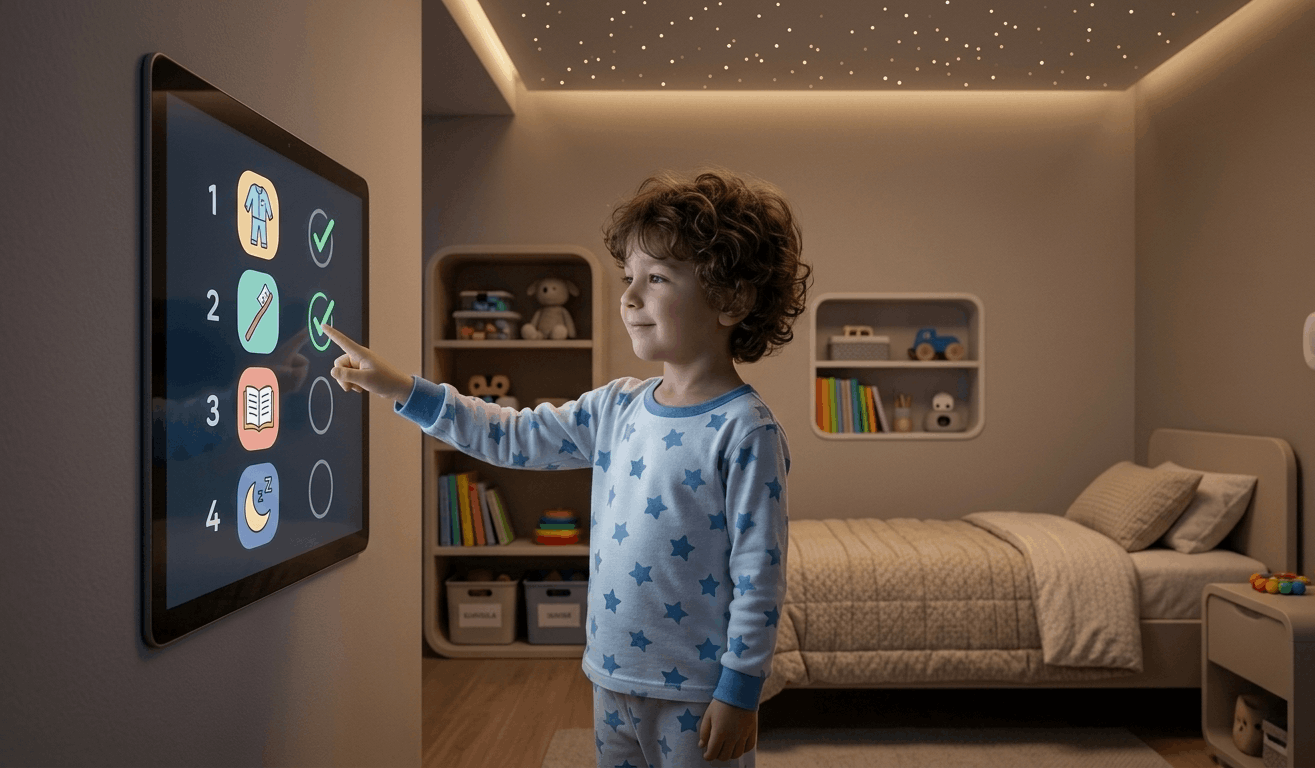
Wall-Mounted Smart Displays as Visual Executive Function Anchors

Children diagnosed with ADHD and Autism Spectrum Disorder struggle significantly with working memory and organizing sequential, multi-step tasks—a neurological barrier commonly referred to as executive dysfunction. Traditional paper chore charts or static whiteboard checklists lose their novelty factor within days, causing the neurodivergent brain to filter them out as passive background clutter. This results in a complete drop in daily task compliance and forces parents into an exhausting cycle of constant nagging, which increases baseline anxiety, triggers emotional fatigue, and disrupts the peace of the entire household.
Hardware Integration:
- System Ecosystem: Amazon Echo Show 15 (wall-mounted) or an iPad running a customized Home Assistant Dashboard.
- Physical Trigger: Bluetooth Flic Buttons or SmartThings Zigbee physical buttons.
The Protocol:
Mount a dedicated smart display at the child’s exact eye level in a central, high-traffic area such as the hallway or kitchen. Utilize specialized visual routine applications (e.g., Brili, Choof, or Goally) synced directly into your primary smart home ecosystem. Place a physical, tactile smart button on the bathroom counter. As the child completes each micro-step of their evening routine (e.g., putting on pajamas, brushing teeth, packing their school bag), they physically press the smart button. This physical action instantly updates the central wall display with a vibrant green checkmark and triggers a soft, rewarding acoustic chime.
Clinical Impact:
The physical tactile feedback of pressing a mechanical button combined with the immediate digital visual confirmation delivers a controlled, predictable micro-dose of dopamine to the ADHD brain. This external reward loop substitutes for internal motivation, reinforcing independent task completion. Over time, this structural scaffolding builds permanent neural pathways for executive functioning, allowing the child to navigate their daily self-care routines autonomously without requiring ongoing, high-stress parental intervention.
4- TAGS:
5- SLUG:
6- META DESCRIÇÃO: Discover how wall-mounted smart displays and physical smart buttons act as visual executive function anchors to help children with ADHD complete routines.
7- META TITLE: Smart Displays for ADHD Executive Function | Home Routines
8- PALAVRAS-CHAVE DE FOCO: smart displays for adhd, visual schedule tech, neurodivergent routine automation